Mastek Intelligent Packing Machinery (Suzhou) Co., Ltd
- +86 512 8781 7868
- export@mastekpack.com



Mastek Intelligent Packing Machinery (Suzhou) Co., Ltd
Selecting the right Automatic Packing Machine requires more than comparing advertised speed or purchase price. In this guide, I explain How to Choose an Automatic Packing Machine for Your Production Line by evaluating product characteristics, packaging format, throughput, automation level, line integration, total ownership cost, safety, service support, and future expansion. I also include a weighted decision matrix, a supplier-shortlist method, and a product-validation process using real packaging materials.
Before requesting quotations, I recommend preparing a packaging-machine specification sheet. The document should describe the product, package dimensions, target output, operating schedule, packaging materials, available floor space, utilities, compliance requirements, and preferred automation level. Without this information, suppliers may quote different machine categories that appear similar but cannot be compared fairly.
For each product, record the following information:
I also separate confirmed requirements from preferences. For example, a 50-pack-per-minute target may be mandatory, while a touchscreen interface in a specific language may be preferred. This distinction helps suppliers prioritize the technical functions that affect production output and compliance.
I start machine selection with the product rather than the machine model. Liquids, powders, granules, solids, bottles, cartons, trays, and cases require different feeding, dosing, forming, sealing, and conveying methods. A machine that handles free-flowing granules may not provide stable dosing for powder, while equipment designed for rigid cartons may be unsuitable for flexible pouches.
Classify the product using four practical groups:
Next, define the package format. A vertical form fill seal machine usually forms bags from a film roll and may be paired with an auger, volumetric cup, multihead weigher, or liquid pump. A horizontal flow wrapping machine is generally considered for individually oriented products such as bars, trays, bakery products, hardware items, or cartons. Filling and sealing machines are more appropriate when the container already exists, such as a bottle, jar, cup, or premade pouch.
Product behavior directly affects dosing accuracy, seal cleanliness, machine speed, and reject rates. Powder can create dust around sealing jaws, sticky products can contaminate contact surfaces, and fragile solids may break under excessive vibration or compression. Packaging materials also influence sealing temperature, dwell time, film tension, forming performance, and cutter design.
For this reason, I require suppliers to test the actual product and packaging material rather than relying only on product descriptions. The test should measure fill-weight variation, seal integrity, package dimensions, material waste, product damage, and reject frequency. For food applications, I would also review hygienic design, cleanability, contact-material declarations, and the inspection method used for seal defects.
The supporting keyword packaging machine speed and production capacity should be treated as a planning calculation, not a headline specification. I first calculate the required saleable output and then convert it into a machine-speed range.
Use this basic formula:
Required machine rate = required saleable units ÷ planned operating minutes ÷ expected availability
For example, if a line must produce 48,000 saleable bags during an eight-hour shift, and the production plan allows 30 minutes for cleaning and changeovers, the available time is 450 minutes. At 85% operational availability, the machine must support approximately 125 saleable bags per minute:
48,000 ÷ 450 ÷ 0.85 = approximately 125 bags per minute
This is not the same as the supplier’s no-load speed. I ask for demonstrated throughput under production conditions, including feeding, sealing, coding, inspection, discharge, and normal minor stops.
A machine running at 150 cycles per minute may produce fewer than 125 acceptable packages per minute if the product feeder starves, seals require adjustment, or rejects accumulate. I therefore compare four separate measurements:
| Measurement | What it shows |
|---|---|
| Rated speed | The machine’s stated maximum under defined conditions |
| Demonstrated speed | Output achieved during a product trial |
| Saleable output | Accepted packages after inspection and rejection |
| Sustainable output | Output maintained over a defined production period |
For a serious quotation, I request a two- to four-hour trial using representative products and materials. The report should record cycle rate, accepted units, rejected units, unplanned stops, changeover events, operator interventions, film consumption, and reasons for rejection. A line operating at 90% of its nominal speed with 98.5% accepted packages may be more useful than one reaching its nominal speed with frequent stops.
I also examine operating hours and demand growth. A small manufacturing business running one shift for 220 days annually may not need the same machine architecture as a high-speed production line running three shifts for 300 days. Conversely, purchasing equipment with no capacity reserve may force another capital purchase within two years.
I divide packaging automation into three levels:
The best choice depends on labor availability, product variation, production volume, and the number of packaging stages. Semi-automatic equipment may suit low-volume operations with frequent product changes. A standalone automatic machine may be appropriate when the main bottleneck is filling, bagging, carton sealing, or wrapping. A fully integrated line becomes more practical when upstream and downstream handling consume several operators or create recurring queue points.
For powders and granules packed into bags, I usually evaluate a vertical form fill seal machine with an auger, volumetric cup, or multihead weighing system. For individually presented products, bars, trays, or cartons, I consider a horizontal flow wrapping machine. For bottles, jars, cups, or premade pouches, I assess filling and sealing equipment with the required pump, piston, servo, or indexing system.
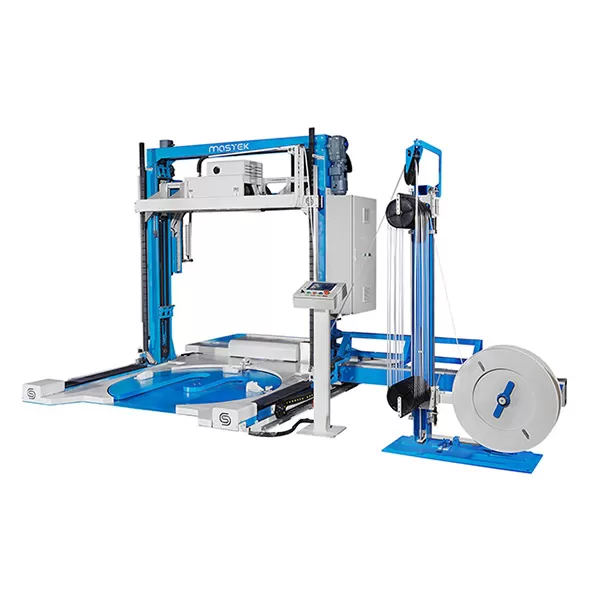
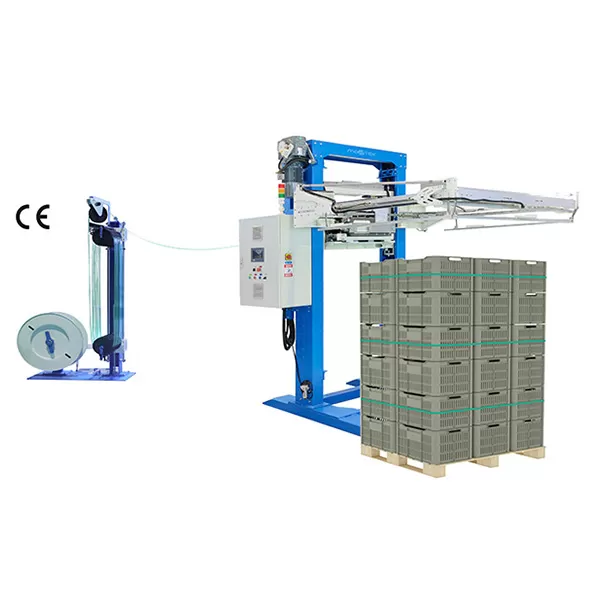
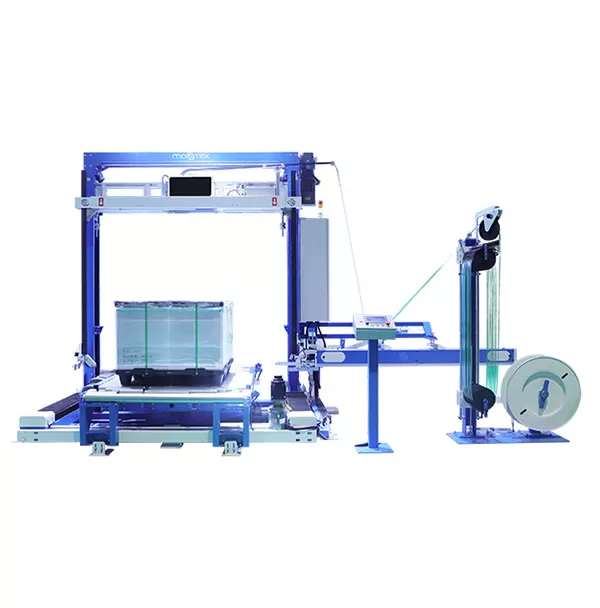
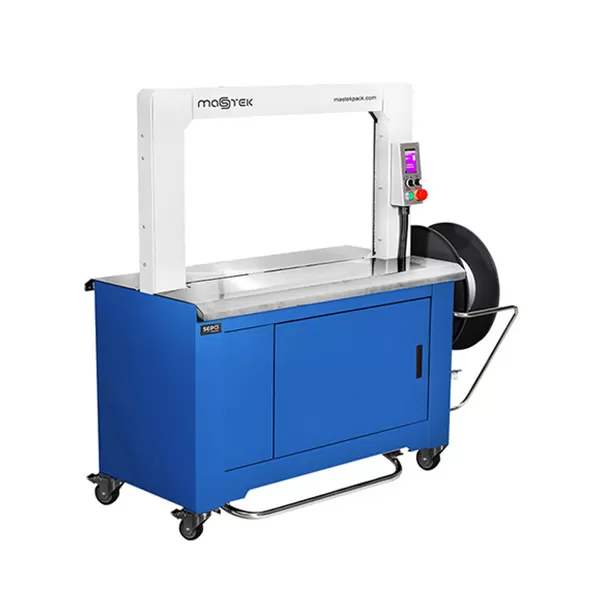
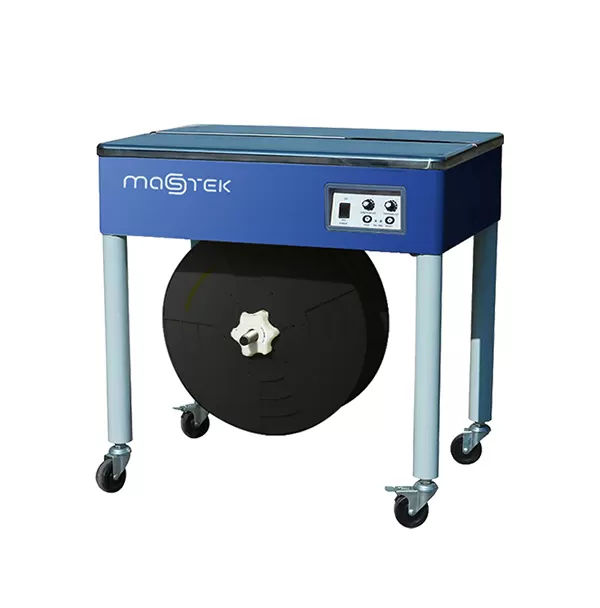
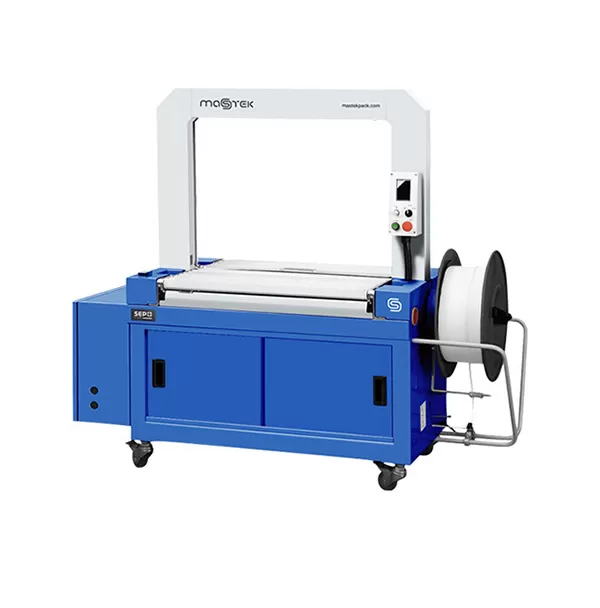
For cartons and cases, the machine category may include carton erectors, carton sealers, case packers, case sealers, pallet wrapping machines, and pallet strapping machines. Mastek’s published portfolio includes strapping equipment, carton erectors and sealers, pallet wrapping machines, and integrated packaging solutions rather than only primary product filling machinery. Its listed MK600 horizontal pallet strapping specification indicates approximately 15–25 pallets per hour, with PLC control and a standard maximum load width of 1,200 × 1,200 millimeters, expandable to 1,400 × 1,400 millimeters depending on configuration.
The automation level determines labor allocation, controls architecture, integration effort, and maintenance responsibility. A standalone machine may require manual transfer to the next stage, while an integrated line requires accurate conveyor speeds, product spacing, sensors, safety circuits, and coordinated fault handling.
I also assess whether the line can run when one module stops. A bypass conveyor, accumulation table, or manual rework station may reduce total production loss during maintenance. In an integrated line, the control system should identify the failed section and stop affected equipment in a controlled sequence rather than creating product accumulation or package damage.
The supporting keyword automatic packaging machine cost and ROI should include the full cost of ownership rather than the equipment invoice alone. I build a five-year or seven-year model that includes capital cost, installation, commissioning, training, utilities, labor, packaging materials, maintenance, spare parts, software, downtime, and future modifications.
A useful ownership-cost structure is:
| Cost category | Items to include |
|---|---|
| Capital purchase | Machine, feeder, tooling, controls, inspection, conveyors |
| Installation | Freight, rigging, electrical work, air lines, flooring, guarding |
| Commissioning | Factory testing, site testing, calibration, production trials |
| Labor | Operators, technicians, supervisors, cleaning staff |
| Utilities | Electricity, compressed air, vacuum, gas, water, exhaust |
| Maintenance | Preventive service, lubrication, calibration, wear parts |
| Spare parts | Sealing elements, belts, sensors, knives, bearings, drives |
| Downtime | Lost contribution margin during failures and changeovers |
| Materials | Film, cartons, tape, straps, stretch film, labels, rejects |
| Training | Operator, maintenance, programming, safety, documentation |
For ROI, I use the following formula:
Payback period = total installed investment ÷ annual net benefit
Annual net benefit should include verified labor savings, additional saleable output, reduced material waste, lower product damage, and reduced rework, minus added maintenance, utilities, consumables, and service costs.
For example, assume installed investment is $180,000. If the project reduces annual labor cost by $72,000, adds $45,000 in contribution margin from additional saleable output, and saves $18,000 in material and rework costs, the gross annual benefit is $135,000. After $25,000 in added maintenance, utilities, and consumables, the estimated net benefit is $110,000, producing a simple payback of approximately 1.64 years.
A machine with a $120,000 purchase price may require $35,000 for installation, guarding, conveyors, electrical work, training, and commissioning. A second machine priced at $145,000 may require only $15,000 for integration because it matches the existing line layout and controls platform. The lower invoice price does not automatically represent the lower investment.
Packaging materials also deserve attention. If a machine reduces film waste from 4.0% to 2.5% on 500,000 packages per month, that difference is 7,500 packages’ worth of material each month. The financial result depends on film cost, package dimensions, product value, and whether the reduction is demonstrated during a controlled trial.
I also include the cost of delayed delivery. If a machine arrives eight weeks late and the company must retain four temporary operators at a combined cost of $22 per hour for 1,200 production hours, temporary labor alone may cost $105,600. Delivery dates should therefore be linked to documented design approval, component procurement, factory testing, shipment, installation, and site acceptance milestones.
I request a line-layout drawing before approving a machine. The drawing should show equipment footprints, conveyor direction, operator stations, maintenance access, electrical cabinets, compressed-air points, product flow, material replenishment routes, reject handling, and emergency-stop locations.
The factory layout should preserve space for:
Integration must also cover control architecture. I ask whether the machine supports the plant’s preferred PLC, HMI language, Ethernet communication, safety relays, barcode scanners, printers, checkweighers, metal detectors, vision systems, and manufacturing data systems. If a supplier uses a proprietary control platform, I require documentation for troubleshooting, backup procedures, password access, and replacement-part availability.
Quality compliance depends on more than package appearance. The system may need checkweighing, seal inspection, barcode verification, label presence detection, metal detection, vision inspection, reject confirmation, batch-code verification, or traceability records. The inspection method should be matched to the risk being controlled and validated using known defective samples.
I also review guarding and operator safety before the machine arrives. The risk assessment should cover pinch points, cutting tools, heated sealing elements, moving conveyors, pneumatic actuators, electrical cabinets, access doors, and unexpected restart. Emergency stops should be positioned according to the operator workflow, and guarded access should require controlled stopping where necessary.
Maintenance requirements should be documented in measurable terms. For example, the supplier should state recommended lubrication intervals, inspection frequency, replacement intervals for wear parts, compressed-air quality requirements, electrical load, and preventive-maintenance tasks. Mastek identifies after-sales support covering layout planning, installation, training, and service, while its published MK300 material states a three-year warranty for its ultrasonic or friction strapping head. These details should still be confirmed in the commercial contract for the exact configuration being purchased.
I use a weighted decision matrix to prevent the lowest quotation from becoming the default choice. Each supplier receives a score from 1 to 5 for every criterion, and the score is multiplied by the assigned weight.
| Criterion | Weight | Supplier score 1–5 | Weighted score |
|---|---|---|---|
| Product and package compatibility | 20% | ||
| Saleable throughput | 15% | ||
| Changeover time and flexibility | 10% | ||
| Integration and layout risk | 10% | ||
| Total ownership cost | 15% | ||
| Service and spare-parts capability | 10% | ||
| Quality inspection and compliance | 10% | ||
| Scalability and future expansion | 10% |
A score of 5 should only be assigned when evidence supports it, such as a product trial, documented reference installation, published specification, service agreement, or test report. A supplier receiving a score of 5 for speed but no evidence for product compatibility should not automatically outrank a supplier with a lower rated speed and proven package results.
This matrix addresses the major risks that are often hidden in supplier quotations. A machine may achieve the requested speed but require a 45-minute changeover, while another reaches slightly lower speed but changes format in 15 minutes. For a plant with six daily changeovers, the second machine may produce more saleable units over the entire shift.
I also add a risk-adjustment column for unresolved issues. Examples include untested packaging film, uncertain delivery dates, unavailable local technicians, incomplete electrical documentation, or unclear software ownership. These issues should reduce the score until the supplier provides evidence or includes contractual mitigation.
I use a four-stage validation process:
The acceptance protocol should define measurable criteria. A sample specification might require 100 consecutive packages within a stated fill-weight tolerance, a minimum 95% of target line speed during a two-hour trial, no unsealed packages in a defined sample, less than 2% material waste, and documented recovery after a simulated sensor fault.
Testing protects the buyer against differences between a demonstration and actual production. The machine may run correctly with a supplier’s film but not with the buyer’s recycled laminate, printed film, carton board, or adhesive tape. Testing also reveals whether operators can perform film loading, cleaning, tooling changes, and fault recovery within the planned time.
I recommend documenting every exception before shipment. If the machine fails a target, the supplier should identify the corrective action, responsible party, due date, and retest method. Final payment should be linked to agreed acceptance milestones rather than only to delivery of the equipment.
The shortlist should include the target supplier and at least two manufacturers with different technical strengths. I treat the prices below as indicative planning ranges, not firm quotations, because final pricing depends on product-contact materials, feeder type, machine speed, inspection systems, controls, installation location, shipping, and integration scope.
| Supplier | Solution focus | Indicative planning range | Suitable customer profile |
|---|---|---|---|
| Mastek Intelligent Packing Machinery | Carton erectors, carton sealers, pallet wrapping, pallet strapping, and end-of-line packaging automation | $8,000–$180,000 for equipment; $40,000–$300,000+ for configured lines | Manufacturers needing carton handling, pallet stabilization, strapping, wrapping, or end-of-line integration |
| Syntegon | Vertical form fill seal, filling, dosing, cartoning, and food or pharmaceutical packaging systems | $150,000–$600,000+ for configured primary packaging systems | Food, pharmaceutical, and high-output manufacturers requiring validated dosing, flexible bag formats, and integrated packaging |
| Fuji Machinery | Automatic packaging machines, product-specific package formats, peripherals, line engineering, and global support | $100,000–$500,000+ depending on format and integration | Manufacturers requiring customized bagging, flow wrapping, robotics, and coordinated line engineering |
| Ishida | Weighing, bagmaking, inspection, case packing, and food-packaging systems | $200,000–$700,000+ for integrated food lines | Food manufacturers requiring multihead weighing, inspection, case packing, and data monitoring |
Mastek describes its business as focused on intelligent strapping machines, carton erectors, and packaging automation solutions, with equipment operating in more than 30 countries and regions. Its public product information also identifies customer projects involving companies in electronics, battery, flooring, and other manufacturing sectors. I would still ask for references with a product and package format similar to the proposed project rather than relying only on geographic coverage.
Syntegon publishes VFFS systems with stated outputs of up to 300 bags per minute for certain configurations, while Fuji emphasizes product-specific customization, peripheral equipment, line engineering, and global support. Ishida’s published equipment portfolio includes weighing, vertical bagmaking, inspection, and integrated case-packing systems. These published capabilities make the suppliers useful comparison points, but the buyer should require a product-specific test before accepting any speed or quality claim.
!
I evaluate manufacturers in four areas: engineering capability, production control, service capability, and commercial risk. The supplier should provide general arrangement drawings, utility requirements, electrical schematics, spare-parts lists, preventive-maintenance instructions, software backup procedures, and a commissioning plan.
I also ask for:
Delivery risk should be managed with a milestone schedule. I divide the project into technical specification approval, design approval, component procurement, mechanical completion, software completion, factory testing, shipment, installation, site testing, and production handover. Each milestone should identify the required documents and the consequence of delay.
How to Choose an Automatic Packing Machine for Your Production Line depends on evidence, not a single speed figure or the lowest purchase price. I recommend confirming product and packaging-material compatibility first, calculating saleable throughput under real operating conditions, selecting the correct automation level, and comparing vertical, horizontal, filling, sealing, carton, case, wrapping, or strapping equipment according to the actual production bottleneck.
The next step is to prepare a complete specification sheet and send the same requirements to at least three suppliers. Require sample testing, a weighted decision matrix, factory acceptance testing, site acceptance testing, and written criteria for fill accuracy, seal integrity, package appearance, output, reject rate, changeover time, and downtime recovery.
Finally, compare the five-year total cost of ownership rather than the machine invoice. Include labor, materials, energy, maintenance, spare parts, installation, training, service response, delivery risk, and future expansion. A suitable Automatic Packing Machine is the one that matches the product, maintains measurable output, fits the factory, supports compliance, and produces a defensible return on investment.
None