Mastek Intelligent Packing Machinery (Suzhou) Co., Ltd
- +86 512 8781 7868
- export@mastekpack.com



Mastek Intelligent Packing Machinery (Suzhou) Co., Ltd
An Automatic Packing Machine performs one or more packaging tasks—such as feeding, dosing, filling, forming, sealing, labeling, carton handling, inspection, or palletizing—with limited operator intervention. Different automatic packing machine types are designed for specific product properties, package formats, production volumes, and line positions, so selecting equipment requires more than comparing advertised speed.
!
I define an automatic packing machine as equipment that controls a packaging operation through programmed mechanical, pneumatic, electrical, or servo-driven systems. Depending on the design, the machine may measure a product, transfer it into a container, create a pouch from film, close a carton, apply a label, inspect package quality, or prepare completed cases for shipment.
Most systems use a combination of sensors, programmable logic controllers, motors, actuators, conveyors, and safety interlocks. A basic machine may automate only filling and sealing, while a complete packaging line can connect feeding, primary packaging, secondary packaging, inspection, case packing, pallet wrapping, and palletizing.
The main reason manufacturers use different machine categories is that products behave differently. A free-flowing granule can be measured by a multihead weigher, while a liquid requires a pump or volumetric filler, and a powder may require an auger system with dust control. Package material, seal width, product temperature, weight tolerance, and production volume also affect the selection.
I group the main types of automatic packing machines by their position and function within the packaging line:
The correct category depends on whether the machine performs primary packaging, secondary packaging, or end-of-line packaging. For example, a vertical form-fill-seal machine may create individual snack bags, while a case packing machine handles the cartons after the snack bags have already been produced.
| Machine type | Main function | Typical products | Common package format | Indicative equipment range |
|---|---|---|---|---|
| Vertical form-fill-seal machine | Forms, fills, and seals bags | Snacks, grains, powders, frozen foods | Pillow bags, gusset bags | $25,000–$120,000 |
| Horizontal flow wrapping machine | Wraps individual products | Bakery goods, soap, hardware, retail items | Three-side-sealed film pack | $18,000–$100,000 |
| Automatic pouch packing machine | Fills and seals premade or formed pouches | Powders, liquids, sauces, pet food | Stand-up pouch, flat pouch, spouted pouch | $30,000–$150,000 |
| Weighing and filling machine | Measures and dispenses products | Granules, snacks, hardware parts | Bags, tubs, jars, cartons | $15,000–$90,000 |
| Liquid filling machine | Doses liquid into containers | Beverages, detergents, cosmetics | Bottles, jars, sachets | $20,000–$130,000 |
| Cartoning machine | Loads and closes cartons | Pharmaceuticals, cosmetics, food products | Folding cartons | $40,000–$200,000 |
| Case packing machine | Packs primary packs into cases | Bottles, cartons, bags, trays | Corrugated cases | $60,000–$250,000 |
| Vacuum packing machine | Removes air and seals packs | Meat, cheese, seafood, prepared foods | Vacuum pouch, thermoformed pack | $20,000–$180,000 |
| Pallet wrapping machine | Applies stretch film | Cases, boxes, industrial goods | Wrapped pallet load | $8,000–$80,000 |
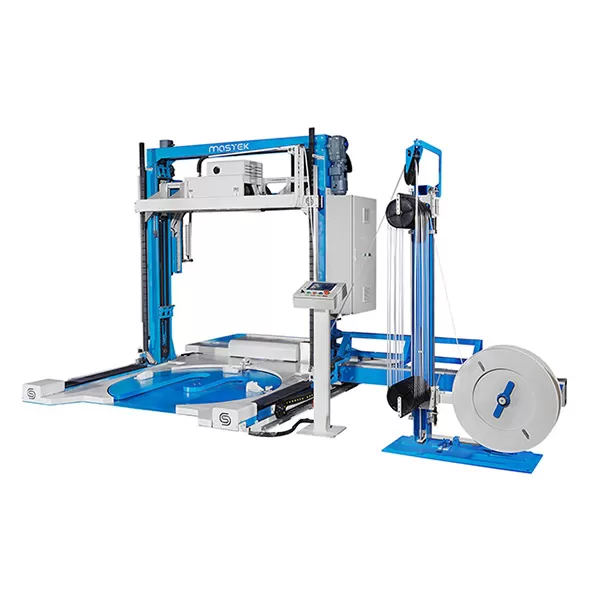
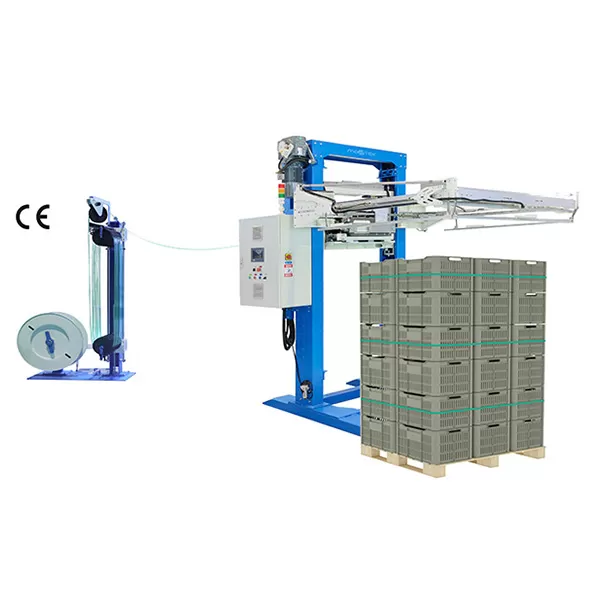
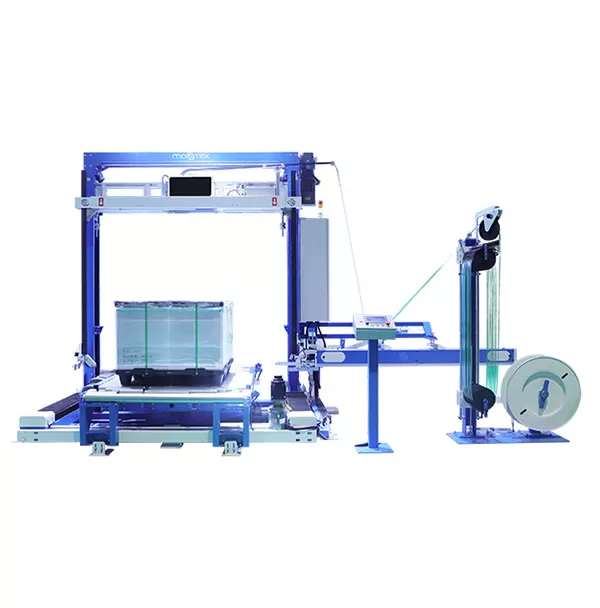
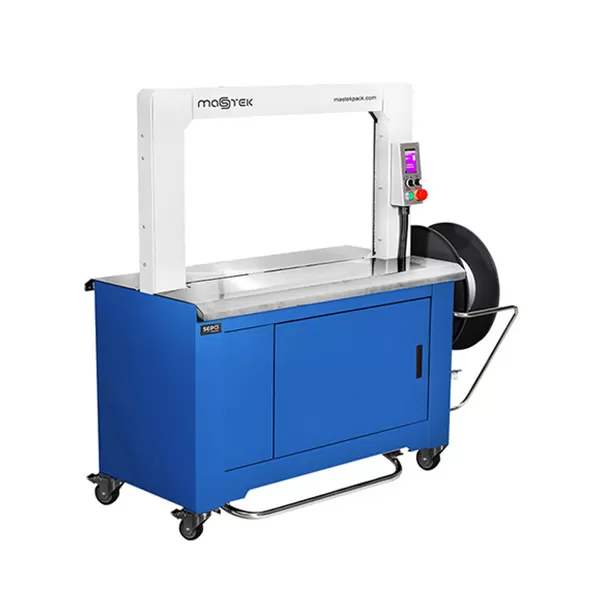
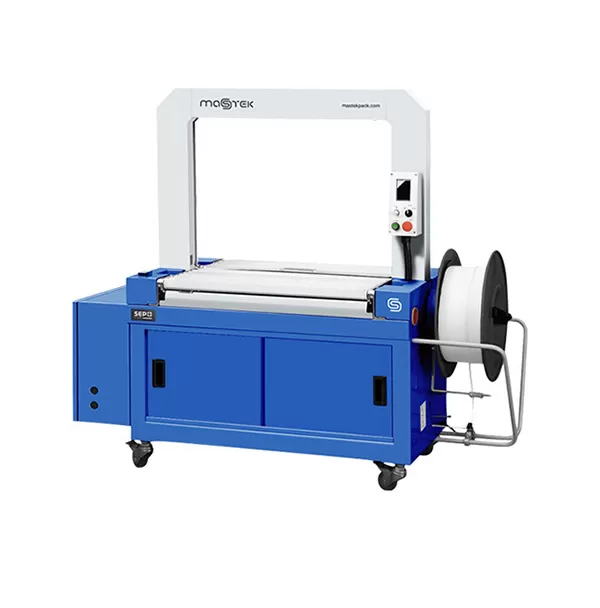
| Automatic pallet strapping machine | Secures palletized products | Cartons, flooring, appliances, building materials | PP or PET strap | $15,000–$100,000 |
| Robotic palletizing system | Arranges cases or bags on pallets | Logistics, food, chemicals, manufacturing | Layered pallet load | $100,000–$400,000 |
These ranges are planning estimates rather than quotations. Actual cost changes with speed, number of lanes, servo axes, weighing heads, hygienic design, vision inspection, change parts, safety requirements, container handling, and integration with existing conveyors.
The first decision in an automatic packing machine guide is to classify the product by physical behavior. I normally separate products into powders, liquids, granules, individual solids, irregular pieces, and grouped industrial items.
Powders such as flour, milk powder, spices, detergents, and pharmaceutical compounds often require auger fillers, vacuum-assisted systems, or controlled screw dosing. Important specifications include bulk density, flowability, particle size, dust generation, moisture sensitivity, and target weight.
A powder line should include dust management where necessary, grounded electrical components, accessible cleaning surfaces, and a sealing system that prevents powder from entering the seal area. A machine that reaches the stated cycle speed but produces contaminated seals may create more waste than a slower machine with stable dosing.
Liquid products are commonly handled with piston fillers, gear pumps, peristaltic pumps, flowmeters, or gravity filling systems. The best choice depends on viscosity, foaming, temperature, suspended particles, corrosiveness, and required fill accuracy.
Low-viscosity beverages may use flowmeter or gravity filling, while thick sauces may require piston or servo-driven pump systems. Aggressive chemicals may require stainless-steel grades, coated contact parts, specialized seals, and controlled drainage.
Granular products include rice, sugar, beans, coffee, seeds, nuts, pellets, and plastic components. Multihead weighers, linear weighers, volumetric cups, and combination scales are common options.
A weighing and filling machine should be evaluated using actual product samples rather than only nominal specifications. I would request a test using at least three production-representative batches and record average weight, standard deviation, giveaway percentage, rejected packs, and cycle time.
Individual products such as soap bars, hardware parts, electrical components, medical devices, and packaged foods may require counting systems, vibratory feeders, robotic pick-and-place units, or vision-guided loading. Product orientation and spacing become important because inconsistent presentation can reduce the effective line rate.
For fragile items, the machine must control acceleration, drop height, contact pressure, and transfer speed. For products with a fixed orientation, servo timing and customized guides may be more important than maximum conveyor speed.
The package format determines the forming, filling, sealing, and handling technology. I evaluate the package before selecting the machine because changing from a pillow bag to a premade stand-up pouch can alter the complete line architecture.
A vertical form-fill-seal machine for food packaging creates a bag from a continuous film roll, fills the bag from above, and seals it vertically and horizontally. These machines are common for snacks, grains, powders, frozen products, pet food, and agricultural materials.
Typical specifications include film width, bag length, sealing temperature, jaw configuration, dosing method, and target cycle rate. A machine rated at 60 bags per minute may produce fewer saleable bags when the product requires long settling time, difficult sealing, frequent film changes, or manual replenishment.
A horizontal flow wrapping machine for retail products feeds products horizontally through a forming box, wraps them in film, and creates longitudinal and end seals. This format is widely used for bakery products, soap, tissues, hardware, stationery, and consumer goods.
The buyer should check product dimensions, film type, sealing temperature, fin-seal arrangement, registration-mark control, and infeed spacing. Changeover time should be measured across the actual product range; a line with 10-minute advertised changeover may require 25–40 minutes if guides, film reels, coding, and sealing settings all need adjustment.
Automatic pouch packing machines are used for powders and liquids when the market requires flat pouches, stand-up pouches, zipper pouches, or spouted pouches. Some systems form pouches from roll stock, while others open and fill premade pouches.
The key evaluation points are pouch dimensions, opening reliability, fill method, seal contamination, zipper handling, spout insertion, and product viscosity. For liquid products, I would also test dripping after filling, seal pressure, package leakage, and the effect of product temperature on sealing.
Vacuum packing machines remove air from a package before sealing. They are frequently used for meat, seafood, cheese, prepared foods, coffee, and other products where oxygen exposure affects shelf life or product appearance.
Performance should be measured through vacuum level, evacuation time, seal temperature, seal width, leakage rate, and product deformation. Vacuum packaging does not correct poor film selection or inadequate refrigeration, so the machine must be assessed as part of the preservation process rather than as an independent solution.
Primary packaging is only one part of a production line. In many factories, the largest labor requirement occurs after filling and sealing, where products must be labeled, loaded into cartons, packed into cases, inspected, palletized, wrapped, and strapped.
Labeling systems apply pressure-sensitive labels, wraparound labels, front-and-back labels, or sleeve labels. Coding equipment adds batch numbers, manufacturing dates, expiration dates, barcodes, QR codes, or variable production data.
I recommend checking label placement tolerance, code contrast, print resolution, reject handling, and data communication with the production-control system. A line should not allow unverified packages to move to case packing if traceability information is missing or unreadable.
A cartoning machine opens folding cartons, inserts products or leaflets, and closes the carton using tuck flaps, glue, or a combination of methods. Cartoning machines for pharmaceutical packaging may also require leaflet insertion, serialization, tamper evidence, vision inspection, and controlled batch records.
Pharmaceutical buyers should define acceptable carton-opening rates, leaflet presence accuracy, code verification, reject confirmation, and cleaning procedures. The machine should also support documented changeover procedures when multiple carton sizes or product formats are used.
Case packing machines load retail packs, pouches, bottles, or cartons into corrugated shipping cases. Loading may be horizontal, vertical, robotic, or drop-style, depending on the product and case design.
The line must coordinate case erecting, product collation, case loading, flap folding, sealing, coding, and discharge. I would evaluate case compression, product orientation, glue temperature, carton board variation, and jam recovery because these factors influence distribution damage and downtime.
Inspection equipment can include checkweighers, metal detectors, X-ray systems, machine vision, seal inspection, label verification, and barcode readers. Each device has a different purpose and should be matched to the risk being controlled.
For example, a checkweigher may identify underweight packs, but it cannot confirm that a barcode is readable. A vision system may verify label position, but it may not detect metal contamination. Validation should specify detection capability, test-piece size where relevant, reject confirmation, false-reject rate, and record retention.
End-of-line packaging equipment prepares loads for transport. Palletizers arrange cases or bags in defined patterns, pallet wrapping machines apply stretch film, and automatic strapping machines secure the load with plastic strap.
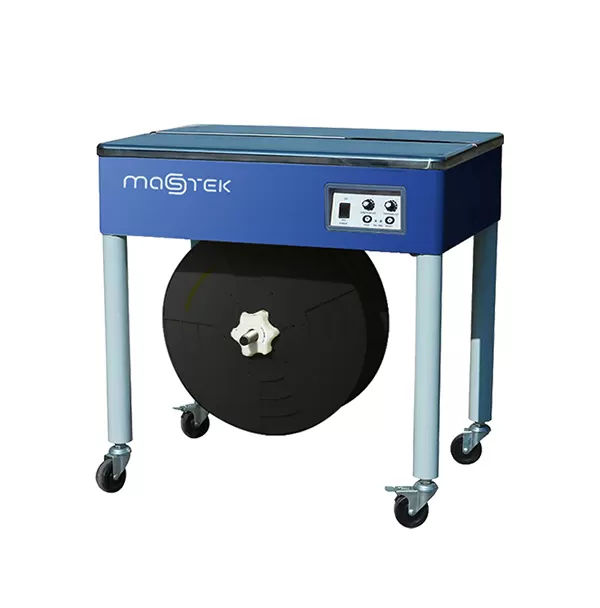
Mastek is an example of a supplier positioned mainly in this end-of-line segment. Its product range includes automatic strapping equipment, carton erectors and sealers, pallet wrapping systems, and pallet strapping models such as the MK300, MK600, and MK900 series. The company states that its equipment has been installed in sectors including carton production, flooring, lithium-related manufacturing, technology, and logistics.
Different industries require different combinations of dosing, packaging, inspection, and end-of-line handling. I use the following application map when comparing automatic packing machines by industry.
| Industry | Product examples | Primary packaging equipment | Secondary or end-of-line equipment |
|---|---|---|---|
| Food and beverage | Snacks, grains, sauces, frozen foods, beverages | VFFS, liquid filler, flow wrapper, vacuum packer | Checkweigher, metal detector, case packer, pallet wrapper |
| Pharmaceuticals | Tablets, capsules, vials, medical kits | Blister machine, bottle filler, pouch machine, cartoner | Vision inspection, serialization, case packer |
| Cosmetics | Creams, lotions, powders, bottles | Piston filler, pump filler, tube filler, labeling machine | Cartoner, case packer, palletizing system |
| Chemicals | Detergents, powders, liquids, granules | Auger filler, pump filler, drum filler, bagging machine | Dust control, checkweigher, case or pallet handling |
| Agriculture | Seeds, fertilizer, grains, feed | Weigher, bagger, VFFS, open-mouth bag filler | Sewing or heat sealing, palletizer, stretch wrapper |
| E-commerce | Mixed cartons, mailers, retail products | Carton forming, flow wrapping, bagging system | Labeling, sorting, case packing, palletizing |
| Industrial goods | Flooring, appliances, hardware, components | Wrapping, strapping, carton sealing | Pallet strapping, wrapping, conveyor transfer |
Food manufacturers often prioritize hygienic access, washdown compatibility, product-contact materials, and rapid format changeover. Pharmaceutical operations place more emphasis on documentation, controlled access, serialization, cleaning validation, and reject traceability.
Cosmetic and chemical manufacturers must account for viscosity, corrosiveness, odor, foaming, flammability, and container shape. Industrial goods may require less emphasis on dosing accuracy but greater attention to load stability, impact protection, strap tension, and pallet transport conditions.
An automatic packing machine usually operates through a sequence of detection, positioning, dosing or loading, closure, inspection, and discharge. Sensors confirm product presence and package position, while the controller coordinates motors, valves, sealing jaws, pumps, feeders, and reject devices.
A typical bagging line begins with product feeding and dosing. The package is then formed or opened, filled to the programmed target, sealed, coded, checked, and discharged to a conveyor. In a complete line, the accepted packs move to cartoning, case packing, palletizing, wrapping, or strapping.
The stated machine speed is not the same as effective throughput. I calculate effective output using the following equation:
Effective throughput = nominal speed × availability × performance rate × quality rate
For example, a machine rated at 80 packs per minute with 90% availability, 92% performance, and 98% quality produces approximately 64.9 saleable packs per minute. This calculation is more useful than comparing nominal speed alone.
A manual packing process relies primarily on operators for measuring, loading, sealing, labeling, or pallet preparation. A semi-automatic packing machine automates selected steps but still requires regular operator involvement, such as manual product loading, bag placement, carton erection, or cycle initiation.
A fully automatic line connects multiple operations with sensors, conveyors, programmed controls, and automatic material handling. It normally requires a higher initial investment and more detailed commissioning, but it can reduce repetitive labor and stabilize cycle timing when product presentation is consistent.
| Factor | Manual packing | Semi-automatic packing | Automatic packing |
|---|---|---|---|
| Initial equipment cost | $1,000–$15,000 | $8,000–$60,000 | $25,000–$400,000+ |
| Typical direct operators per line | 2–10 | 1–4 | 0.5–3 |
| Repeatability | Operator-dependent | Partly controlled | Program-controlled |
| Changeover | Often immediate | Usually manual | Requires planned settings or tooling |
| Suitable volume | Low or variable | Low to medium | Medium to high |
| Integration need | Minimal | Moderate | High |
| Data and traceability | Limited | Possible | Commonly integrated |
For small businesses with fewer than 500–1,000 packs per shift, manual or semi-automatic equipment may produce a lower total cost. For operations running multiple shifts, the labor difference, material savings, and reduced handling errors can justify automation even when the equipment price is higher.
Before purchase, I recommend a factory acceptance test using the buyer’s product, film, pouch, carton, labels, and shipping cases. The test should run long enough to expose thermal drift, feeder inconsistency, material variation, and operator intervention requirements.
A practical test protocol should record:
For quality compliance, I would define acceptance limits before the test begins. Examples include a fill-weight tolerance of ±1% for suitable granular products, a maximum reject rate of 1–2% during stable production, confirmed barcode readability, and no visible channel leaks in the agreed sample set. The final limits must reflect the product, regulatory requirements, package material, and customer specifications.
Packaging material affects sealing temperature, coefficient of friction, film tracking, pouch opening, carton forming, and label adhesion. A machine should be tested with every material structure expected during the first year, not only the easiest film or carton available.
I pay particular attention to sealing-window width. If a film seals acceptably only within a narrow temperature range, minor changes in speed, ambient temperature, or film tension may create leaks or wrinkles. The buyer should request documented settings for each material and confirm whether change parts are required for different widths, pouch styles, or container sizes.
Changeover performance should be measured rather than described generally. Record the time from the final acceptable pack of Product A to the first acceptable pack of Product B, including cleaning, film replacement, tooling exchange, recipe loading, coding changes, and quality approval.
The purchase price is only one part of automatic packing machine cost. I divide total cost of ownership into equipment, installation, tooling, utilities, maintenance, consumables, labor, downtime, quality losses, and integration.
| TCO category | Planning questions |
|---|---|
| Equipment | What is included in the base quotation, and what options are excluded? |
| Installation | Are freight, rigging, electrical work, air lines, commissioning, and training included? |
| Tooling | Are change parts, forming collars, sealing jaws, grippers, or carton guides required? |
| Utilities | What are the connected load, compressed-air flow, vacuum demand, and heat requirements? |
| Maintenance | What are the replacement intervals and annual spare-parts budget? |
| Consumables | How much film, adhesive, strap, labels, ink, and compressed air are consumed? |
| Labor | How many operators are required per shift before and after automation? |
| Downtime | What is the response time for remote and on-site service? |
| Integration | What conveyors, sensors, robots, software, and safety fencing are needed? |
| Quality losses | How much waste results from underweight packs, seal failures, jams, and damage? |
I calculate simple payback with this formula:
Payback period = total installed investment ÷ annual net operating benefit
Assume an installed line costs $180,000, reduces labor and overtime by $72,000 per year, saves $18,000 in packaging material, reduces waste by $12,000, and adds $30,000 in annual maintenance and utilities. The annual net benefit is $72,000, producing a simple payback period of 2.5 years.
I also test sensitivity. If production volume falls by 20%, the payback period may extend beyond three years. If the line operates across two shifts for 300 days per year and eliminates only one operator per shift at a loaded annual cost of $42,000, labor savings alone may reach $84,000 before material or quality improvements are counted.
When I compare automatic packing machine suppliers, I separate equipment capability from supplier execution. A technically suitable machine can still create project risk if drawings, electrical documentation, spare parts, training, installation support, or acceptance procedures are incomplete.
A supplier evaluation should include:
Mastek provides an example of a company focused on strapping, carton erecting, pallet wrapping, and packaging automation. Its published company information describes a design and development team, a factory covering approximately 50 acres, installations in more than 30 countries and regions, and projects involving technology, carton, flooring, lithium-related, and multinational manufacturing operations. For a buyer considering Mastek, the relevant question is whether its end-of-line equipment matches the required load dimensions, strap material, pallet pattern, line speed, and integration interface.
I use troubleshooting during the purchase stage, not only after installation. Repeated seal failures may indicate incorrect film structure, unstable temperature control, product contamination, insufficient pressure, or excessive line speed.
| Observed issue | Possible cause | Validation action |
|---|---|---|
| Underweight packs | Feeder bridging, unstable density, incorrect calibration | Run repeated weigh tests and inspect feeder behavior |
| Powder in seal area | Poor product settling or excessive dust | Test settling time, dust extraction, and seal-jaw clearance |
| Leaking seals | Wrong temperature, pressure, dwell time, or film | Perform seal-strength and leak testing across the speed range |
| Film wandering | Incorrect tension, alignment, or friction | Run multiple film reels and measure tracking stability |
| Frequent pouch-opening failures | Weak gripper timing or inconsistent pouch dimensions | Test several pouch batches and record opening success rate |
| Carton jams | Board variation, incorrect guides, or poor carton blanks | Test carton samples from different lots |
| High false rejects | Incorrect sensor thresholds or unstable product position | Compare rejected samples with manually inspected samples |
| Pallet instability | Incorrect strap tension, film application, or stacking pattern | Conduct transport simulation or controlled load testing |
| Long changeover | Excessive manual tooling or unclear recipes | Time each changeover activity and identify external tasks |
For acceptance testing, I recommend separating capacity, quality, and reliability tests. A capacity test confirms that the line reaches the agreed saleable output, a quality test confirms weights, seals, labels, and package appearance, and a reliability test confirms stable performance across an extended production period.
The following matrix provides a supplier-neutral starting point for choosing the right equipment.
| If your priority is... | Consider... | Main reason |
|---|---|---|
| Powdered products in bags | Auger filler with VFFS or pouch machine | Controls powder dosing and limits seal contamination |
| Granules with variable piece size | Multihead or linear weigher | Adjusts portions according to weight rather than volume |
| Liquids with changing viscosity | Servo piston, gear pump, or flowmeter filler | Matches the dosing method to fluid behavior |
| Individual retail products | Horizontal flow wrapper | Maintains product orientation and creates compact packs |
| Pharmaceutical cartons | Cartoner with leaflet, coding, and vision modules | Supports traceability and controlled package verification |
| High-volume case distribution | Case packer with automatic case sealing | Reduces repetitive loading and stabilizes case output |
| Palletized industrial goods | Pallet wrapper and automatic strapping machine | Controls load stability during storage and transport |
| Multiple product sizes | Servo machine with recipe control and change parts | Reduces adjustment errors during format changes |
| Limited floor space | Compact integrated cell | Reduces conveyor length and operator travel |
| Variable production demand | Modular semi-automatic or automatic line | Allows capacity expansion without replacing every machine |
I would also confirm whether the equipment can communicate with upstream and downstream systems. Packaging machine integration with conveyors and labeling systems may require product-present signals, line-speed references, barcode data, reject outputs, emergency-stop circuits, and production records.
Automatic Packing Machine Types and Their Applications vary from dosing and filling systems to form-fill-seal machines, pouch packers, flow wrappers, vacuum packers, cartoners, case packers, inspection equipment, pallet wrappers, strapping machines, and palletizers. I select among them by matching product behavior, package format, production volume, accuracy requirements, available space, labor model, and downstream logistics needs.
For food and agricultural products, weighing, VFFS, vacuum, inspection, and case-packing systems are common combinations. Pharmaceutical and cosmetic operations often require controlled filling, labeling, coding, cartoning, and vision inspection. Industrial manufacturers may obtain greater value from wrapping, carton handling, palletizing, and strapping equipment.
My recommended next step is to prepare a product-and-package specification, collect representative materials, and run a documented factory acceptance test. Compare saleable throughput rather than nominal speed, and calculate total cost using installation, tooling, utilities, maintenance, labor, consumables, downtime, and integration. This approach gives manufacturers a clearer basis for choosing automatic packing machines that meet quality requirements while controlling delivery risk and long-term operating cost.