Mastek Intelligent Packing Machinery (Suzhou) Co., Ltd
- +86 512 8781 7868
- export@mastekpack.com



Mastek Intelligent Packing Machinery (Suzhou) Co., Ltd
Carton Packing Machine types describe the equipment used to open, load, close, and sometimes seal cartons around products in industrial packaging lines. I compare horizontal, vertical, top-load, end-load, semi-automatic, and fully automatic systems by product shape, carton format, throughput, floor space, and integration requirements.
The main carton packing machine types differ by loading direction, product handling method, carton style, and automation level. Horizontal and end-load machines are common for bottles, tubes, pouches, and retail boxes, while vertical and top-load systems suit bulk products or items that cannot be pushed horizontally. Intermittent machines prioritize controlled handling, and continuous machines support higher production speeds when product flow is stable.
| Machine type | Loading method | Ideal products | Typical speed | Carton format | Best-fit production environment |
|---|---|---|---|---|---|
| Horizontal end-load cartoner | Product enters from the side | Bottles, tubes, blister packs, trays, retail boxes | 30–150 cartons/minute | Glue or tuck-end cartons | Pharmaceutical, food, cosmetics, consumer goods |
| Vertical cartoner | Product drops or is inserted from above | Bulk items, bags, pouches, irregular products | 15–80 cartons/minute | Open-top or top-seal cartons | Food, chemical, agricultural, general industrial |
| Top-load cartoner | Product is placed from the top | Grouped packs, bottles, trays, fragile items | 20–100 cartons/minute | Top-load cartons or cases | Food, cosmetics, household products |
| Intermittent-motion cartoner | Machine stops during forming and loading | Products requiring precise positioning | 20–100 cartons/minute | Tuck, glue, or lock-bottom cartons | Pharmaceutical and mixed-product lines |
| Continuous-motion cartoner | Product and cartons move continuously | Stable, high-volume product streams | 80–300 cartons/minute | Standard folding cartons | High-speed food, personal care, and consumer goods |
| Semi-automatic cartoner | Operator assists loading or carton handling | Low-volume or frequently changing products | 5–30 cartons/minute | Manual or machine-formed cartons | Small manufacturers and pilot production |
| Fully automatic cartoner | Automatic forming, loading, closing, and controls | Standardized products and long production runs | 30–300 cartons/minute | Pre-glued, tuck-end, or glued cartons | Integrated industrial packaging lines |
I classify carton packing machines using four practical factors: loading direction, motion pattern, automation level, and carton-closing method. This classification is more useful than selecting equipment by speed alone because a machine that reaches 150 cartons per minute may still perform poorly if the product is unstable, the carton blank is inconsistent, or the upstream feeder cannot maintain the required flow.
A horizontal cartoning machine forms or opens a carton, places the product through a side opening, and closes the carton with tuck flaps, hot-melt glue, or another sealing method. It is commonly used for bottles, tubes, blister packs, sachets, trays, and boxed consumer products that can be conveyed in a controlled orientation.
Horizontal systems generally require more line length than vertical machines because the carton magazine, product feeder, loading station, and closing station are arranged along a horizontal path. Their main advantage is controlled product positioning, which supports printed cartons, inserts, leaflets, and multi-component retail packs. Intermittent-motion versions are often selected for pharmaceutical packaging because they allow inspection and precise placement at each station.
Vertical cartoners load products from above, either by gravity, a dosing system, robotic placement, or manual assistance. They are suitable for bulk products, pouches, irregular components, bags, hardware, and products that are difficult to push through a horizontal carton opening.
Top-load machines also place products from above but usually use a controlled pick-and-place or grouping system. They work well when the product must remain upright, when several items are packed together, or when the carton has a wide top opening. These machines can reduce floor-space demand, although they may need more ceiling clearance and precise vertical handling equipment.
End-load cartoners insert products through the open end of a carton. The product may be pushed individually, grouped into a count, or transferred by a flighted conveyor. End-load designs are common in pharmaceutical, food, personal-care, and household-product packaging because they can support cartons with printed information, leaflets, bottles, and secondary protection.
The key selection issue is product stability. Rigid products with consistent dimensions are usually easier to push than flexible bags or loose components. If the product can rotate, collapse, or bridge at the carton entrance, the line may require guides, servo-controlled pushers, vision inspection, or a different loading direction.
A semi-automatic carton packing machine reduces manual carton handling or closing but still depends on an operator for product placement, carton loading, or batch changes. These systems commonly operate between 5 and 30 cartons per minute and can be suitable for low-volume production, contract packaging, seasonal products, and manufacturers with many carton sizes.
An automatic carton packing machine performs carton forming, product feeding, loading, closing, and monitoring with limited operator intervention. Production rates commonly range from 30 to 300 cartons per minute, but the practical rate depends on product stability, carton board quality, feeder capacity, changeover time, and inspection requirements. Automatic equipment offers greater labor reduction, but it also increases the need for controls engineering, preventive maintenance, validation, and spare-part planning.
An automatic system normally begins with a carton magazine that stores flat blanks. A vacuum pick-up or mechanical device separates one blank, opens it, and transfers it to the loading position. At the same time, an infeed conveyor, timing screw, robotic feeder, or product grouping system prepares the product for insertion.
The product enters the carton through a side, top, or bottom opening, depending on the machine design. Sensors verify carton presence, product position, flap condition, and loading status before the closing station folds or glues the carton. Faulty cartons can be diverted to a reject conveyor, while accepted cartons continue to downstream equipment such as checkweighers, labelers, case packers, palletizers, strapping machines, or pallet wrapping systems.
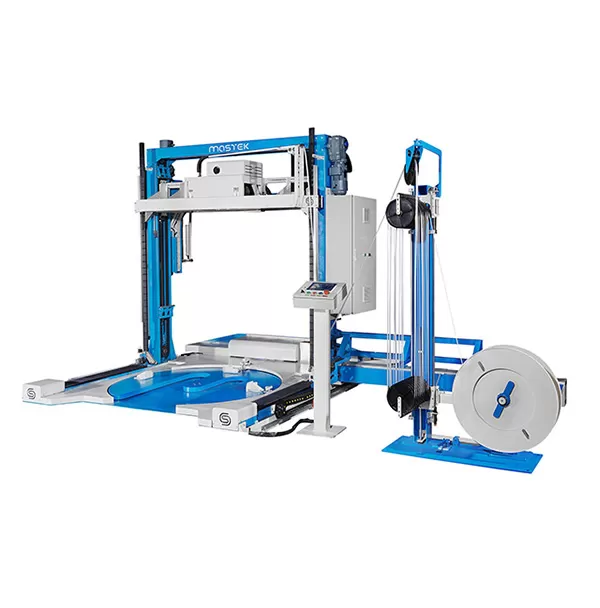
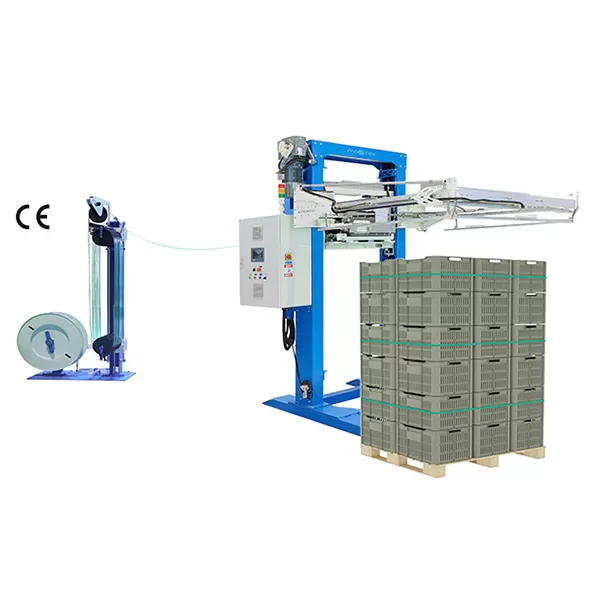
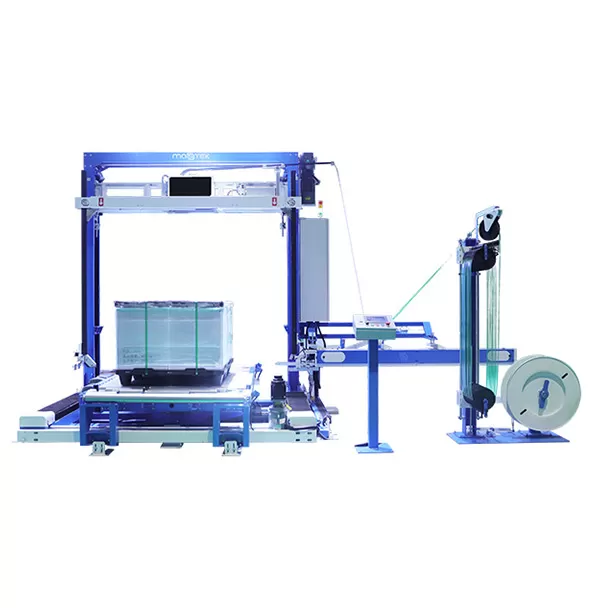
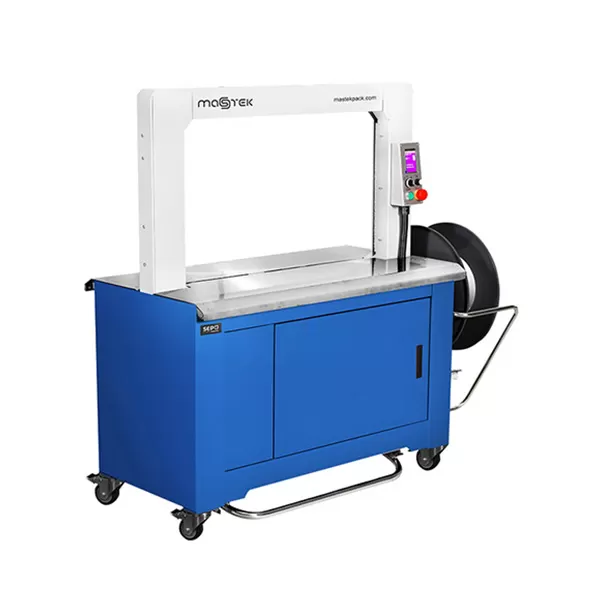
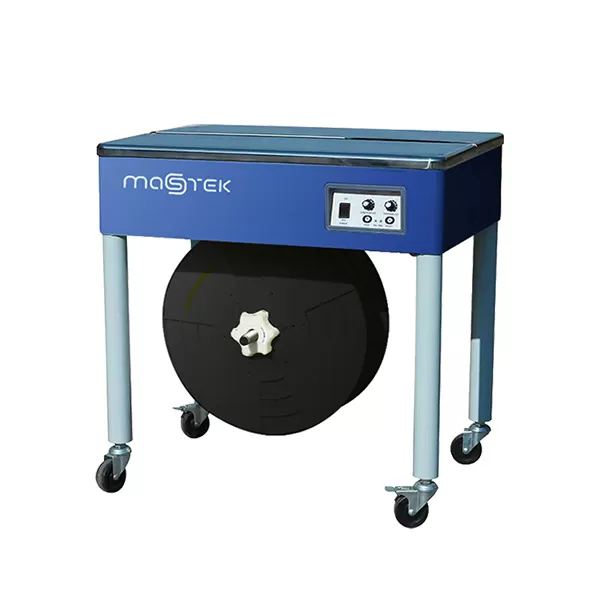
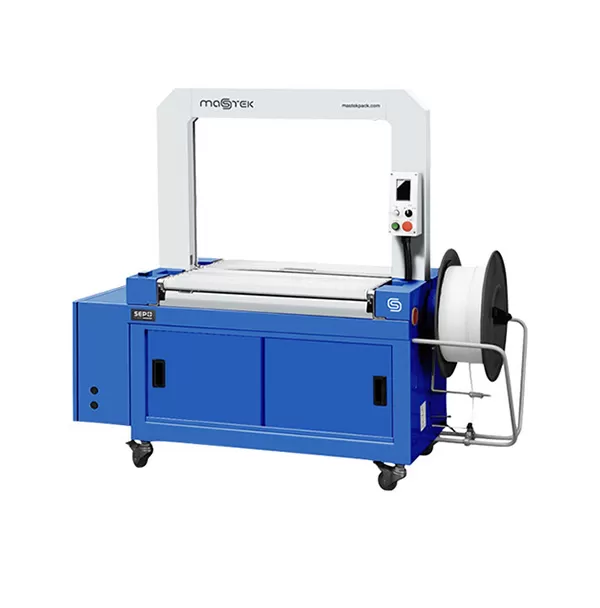
A complete packaging line may therefore include product processing equipment, accumulation conveyors, carton forming and loading equipment, coding, vision inspection, rejection handling, case packing, pallet handling, and warehouse transfer. Mastek provides packaging automation products including carton erector and sealing equipment, strapping systems, pallet wrapping machines, and related line solutions, so its equipment is relevant when carton packing is being connected to downstream end-of-line automation.
Food manufacturers commonly use horizontal, vertical, and top-load cartoners for pouches, trays, sachets, bottles, bars, and grouped products. Stainless-steel contact areas, washdown-compatible construction, controlled product feeding, and rapid changeover are important where several recipes or pack sizes share one line.
Pharmaceutical packaging lines often use intermittent-motion horizontal cartoners because they require precise carton opening, leaflet insertion, product counting, serialization interfaces, and reject verification. A typical specification review should include carton dimensional tolerance, product orientation, batch-code inspection, tamper-evident requirements, and validation documentation.
Cosmetics producers may package tubes, jars, bottles, palettes, and promotional sets. Horizontal and top-load systems are useful when products must be presented in a fixed orientation or grouped with inserts. Vision inspection can verify color, label presence, carton print, and product count before final closing.
Chemical and industrial products may include pouches, hardware, components, filters, tools, and irregular items. Vertical cartoners and top-load systems often handle these products more effectively than side-loading machines because the product can be dropped, grouped, or placed from above without forcing it through a narrow carton opening.
A cartoner places products into folding cartons, usually made from printed paperboard. A case packer places cartons, bags, bottles, or other secondary packs into corrugated shipping cases. The two machines serve different packaging layers and are frequently installed in sequence rather than treated as alternatives.
| Factor | Cartoning machine | Case packer |
|---|---|---|
| Primary package | Folding carton | Corrugated case or shipping box |
| Main purpose | Retail presentation and product protection | Transport grouping and distribution protection |
| Typical loading | Individual products or small groups | Cartons, trays, bags, or bundled units |
| Product handling | Controlled placement into carton | Case loading, collating, and compression |
| Common downstream equipment | Checkweigher, labeler, case packer | Palletizer, strapper, stretch wrapper |
| Typical use | Pharmaceutical, food, cosmetics, retail goods | Warehousing, logistics, industrial distribution |
A carton packing machine is therefore not the same as a case packer or carton sealing machine. The carton packing machine loads products into folding cartons, while a carton sealer normally closes already-formed cartons with tape, glue, or mechanical flaps. A case packer operates at a larger shipping-pack level and may receive finished cartons from the cartoner.
I recommend evaluating the machine in the following order because product behavior usually determines the correct equipment family before price becomes meaningful.
| Selection factor | Questions to answer | Typical equipment impact |
|---|---|---|
| Product format | Is the product rigid, flexible, loose, liquid-filled, fragile, or irregular? | Determines feeder, loading direction, and guides |
| Carton dimensions | What are the minimum, maximum, and most frequent carton sizes? | Defines tooling range and changeover requirements |
| Throughput | What is the required cartons-per-minute rate during normal and peak production? | Determines intermittent or continuous motion |
| Carton style | Tuck-end, glue, lock-bottom, sleeve, or top-load? | Determines forming and closing modules |
| Automation level | How much operator labor is available per shift? | Defines semi-automatic or fully automatic design |
| Materials | What paperboard grade, coating, and blank quality are used? | Affects vacuum handling and glue performance |
| Floor space | What are the available length, width, height, and access clearances? | Helps compare horizontal and vertical layouts |
| Budget | What capital and operating cost can the project support? | Influences machine scope and future expansion |
Indicative 2026 planning prices vary widely by format and automation. Semi-automatic equipment may fall near $8,000–$35,000, basic automatic cartoners commonly range from $35,000–$120,000, and high-speed or highly integrated systems can exceed $150,000–$350,000. These figures should be treated as early budgeting ranges rather than quotations because tooling, inspection, feeders, installation, shipping, taxes, and validation can add 20%–60% to the machine purchase price.
Total cost of ownership also includes change parts, preventive maintenance, spare sensors, vacuum components, belts, glue equipment, software support, operator training, and service visits. Installation and commissioning may require one to four weeks depending on line complexity, while pharmaceutical validation can add documentation, testing, and approval work. I would request a full cost schedule that separates the base machine, product feeder, carton tooling, format parts, controls integration, factory acceptance testing, site acceptance testing, and annual service coverage.
A practical carton packing line starts with product discharge or accumulation, followed by orientation, counting, grouping, and carton loading. The carton side normally includes blank storage, carton forming, opening verification, product insertion, leaflet or insert placement, closing, coding, and inspection. Downstream equipment may include checkweighing, metal detection, label inspection, case packing, palletizing, strapping, and stretch wrapping.
Control integration should be specified before purchase rather than after installation. The line may require PLC communication, recipe storage, servo synchronization, barcode scanning, vision inspection, reject confirmation, safety interlocks, and production-data collection. I also recommend asking for documented changeover procedures, target changeover times, access to spare-part lists, and a clear fault-code structure so operators can restore production without unnecessary service delays.
Carton Packing Machine Types for Industrial Packaging Lines should be selected according to product shape, loading direction, carton dimensions, production volume, available floor space, automation level, and total ownership cost. Horizontal end-load machines are a practical starting point for rigid retail products, pharmaceutical packs, tubes, and bottles, while vertical and top-load designs are often better for bulk, irregular, grouped, or gravity-fed products.
For low-volume manufacturing, a semi-automatic system can reduce capital exposure and support frequent product changes. For stable, high-volume production, a fully automatic carton packing machine can reduce manual handling when the product feeder, carton blanks, sensors, controls, and downstream equipment are correctly matched. Before requesting quotations, I would prepare product samples, carton drawings, speed targets, changeover requirements, layout dimensions, inspection needs, and a five-year cost estimate.
Mastek is relevant when the project extends beyond carton loading into carton erection, sealing, strapping, pallet wrapping, and end-of-line packaging automation. The final supplier comparison should separate cartoner performance from the wider line scope and confirm testing conditions, acceptance criteria, installation responsibility, training, spare parts, and service response.
None