Mastek Intelligent Packing Machinery (Suzhou) Co., Ltd
- +86 512 8781 7868
- export@mastekpack.com



Mastek Intelligent Packing Machinery (Suzhou) Co., Ltd
An automatic strapping machine, also known as a strapping or banding machine, is a device commonly used in packaging and shipping facilities to securely bundle and seal products or packages with plastic or metal straps. These machines streamline the strapping process, increasing efficiency and ensuring consistency in packaging operations. Here's how an automatic strapping machine typically works: The working process can generally be divided into five stages: strap feeding, tensioning, sealing, cutting, and package discharge.
The strapping machine first feeds PP or PET strap from a strap coil through the strap path and around the package. Sensors and the strap feeding mechanism control the position and amount of strap required for each cycle.
For continuous packaging lines, stable strap feeding is important because inconsistent feeding can affect tensioning, sealing, and overall machine cycle time.
Once the strap has been positioned around the package, the tensioning system pulls the strap tight.
The required tension depends on factors such as:
Package size and weight
Product shape and stability
Strap material
Strap width and thickness
Transportation and handling conditions
Proper tension should secure the load without damaging cartons, products, or package edges.
After tensioning, the two ends of the strap are joined to form a secure seal.
The sealing method depends on the machine configuration and strap material. Automatic strapping systems may use different sealing technologies, including friction sealing and ultrasonic sealing.
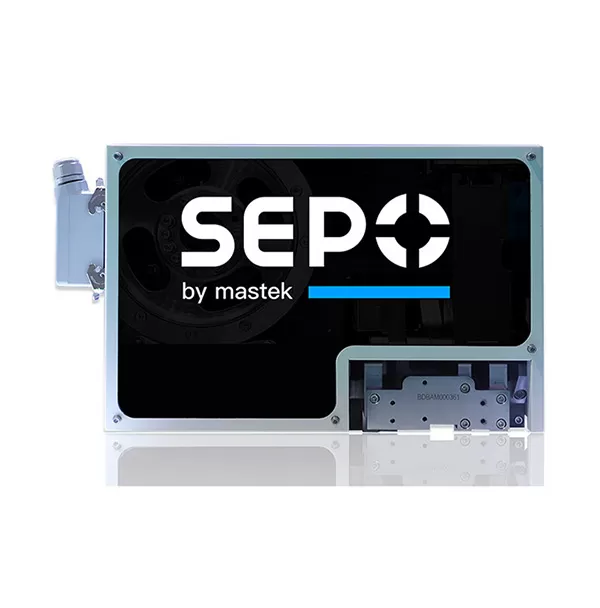
For applications requiring fast, repeatable sealing, an Ultrasonic Strapping Head can be integrated into an automatic strapping system. Mastek's ultrasonic solution uses ultrasonic energy to join the strap without conventional heating elements, making the strapping head an important component in the overall packaging process.
Related product: Ultrasonic Strapping Head
After the strap has been sealed, the machine cuts the remaining strap from the coil. The cutting mechanism then returns to its starting position for the next packaging cycle.
In a fully automatic line, feeding, tensioning, sealing, and cutting are coordinated by the machine's control system to maintain repeatable cycle operation.
After the strapping cycle is completed, the secured package can move to the next stage through a conveyor or other material-handling system.
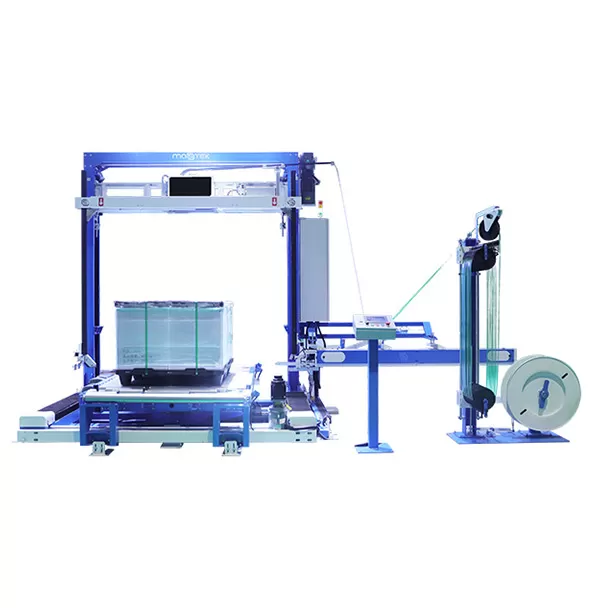
Depending on the production line, an automatic strapping machine can be integrated with conveyors, pallet handling systems, wrapping machines, carton packaging equipment, and other end-of-line automation.
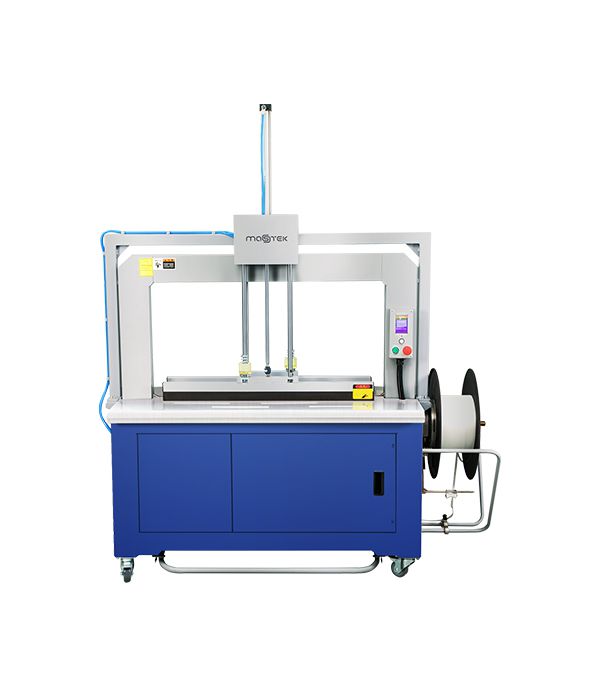
Automatic strapping machines are designed to be highly efficient and user-friendly, often featuring programmable controls and sensors to ensure accurate and consistent strapping. Some advanced models may also include additional features such as automatic tension adjustment, self-diagnostic capabilities, and integration with conveyor systems for seamless operation.
An automatic strapping machine is more than a strap feeding and sealing device. Its performance depends on the coordination of several components.
| Component | Main Function |
|---|---|
| Strap Dispenser | Stores and feeds the strap |
| Strap Feeding System | Moves the strap around or through the package |
| Tensioning System | Applies the required strap tension |
| Strapping Head | Performs strap sealing and cutting |
| Sensors | Detect package and strap position |
| Control System | Coordinates the complete strapping cycle |
| Conveyor System | Transfers packages through the production line |
Among these components, the strapping head directly affects the sealing process and therefore has a significant impact on package security, cycle consistency, and machine reliability.
The right machine depends on the product and packaging process.
For cartons, bundles, and relatively stable packages, a high-speed automatic strapping machine can provide repeatable strap positioning and sealing.
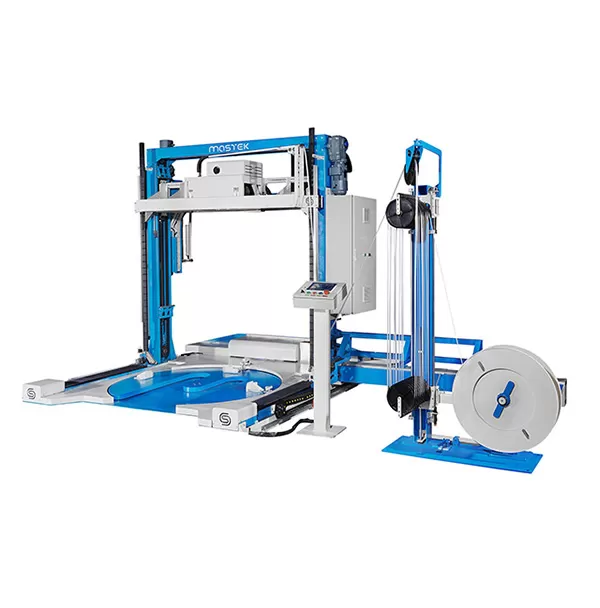
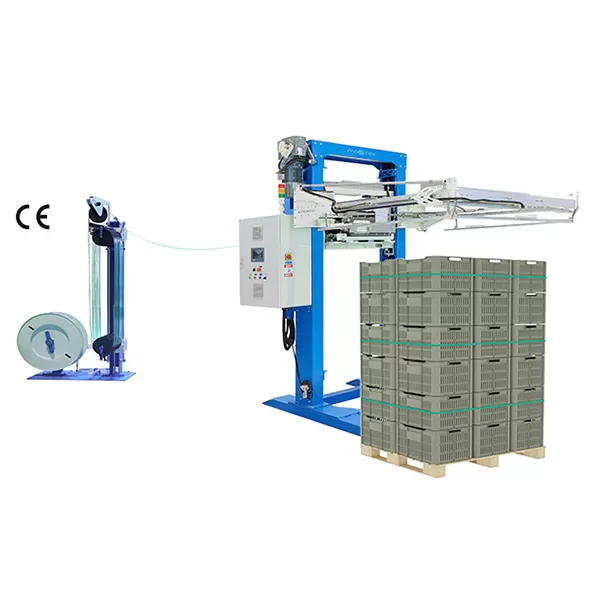
For palletized products, the machine needs to accommodate the pallet dimensions, load height, strap direction, and required tension. Vertical and horizontal pallet strapping configurations are available for different load conditions.
For high-volume production, an automatic strapping machine can be integrated with conveyors, pallet wrapping equipment, carton handling systems, and other packaging machinery.
Mastek provides automatic strapping solutions for different packaging configurations, including vertical pallet strapping, horizontal pallet strapping, and integrated strapping and wrapping systems.
Mastek develops automatic strapping machines and strapping systems for industrial packaging applications. Depending on the package type and production requirements, available configurations include automatic carton strapping machines, vertical pallet strapping machines, horizontal pallet strapping machines, and integrated strapping and wrapping systems.
Mastek also provides Friction Strapping Heads and Ultrasonic Strapping Heads for automatic packaging equipment.
For example:
MK300 – Automatic Vertical Pallet Strapping Machine with Ultrasonic Strapping Head SEPO II
MK600 – Automatic Horizontal Pallet Strapping Machine with Ultrasonic Strapping Head SEPO II
MK900 – Fully Automatic Strapping & Wrapping All-in-One Machine
Choosing between these configurations depends on your product dimensions, pallet arrangement, strap requirements, throughput, and existing automation line.
If you are evaluating an automatic strapping machine or replacing an existing strapping system, send us your package dimensions, product type, strap material, required capacity, and automation requirements.
Mastek can recommend a suitable strapping machine and sealing configuration based on your actual packaging process.
Request a Machine Recommendation → Contact Mastek
Overall, automatic strapping machines offer a fast, reliable, and cost-effective solution for bundling and securing packages in various industries, ranging from manufacturing and distribution to logistics and e-commerce. By automating the strapping process, these machines help improve productivity, reduce labor costs, and enhance the overall efficiency of packaging operations.